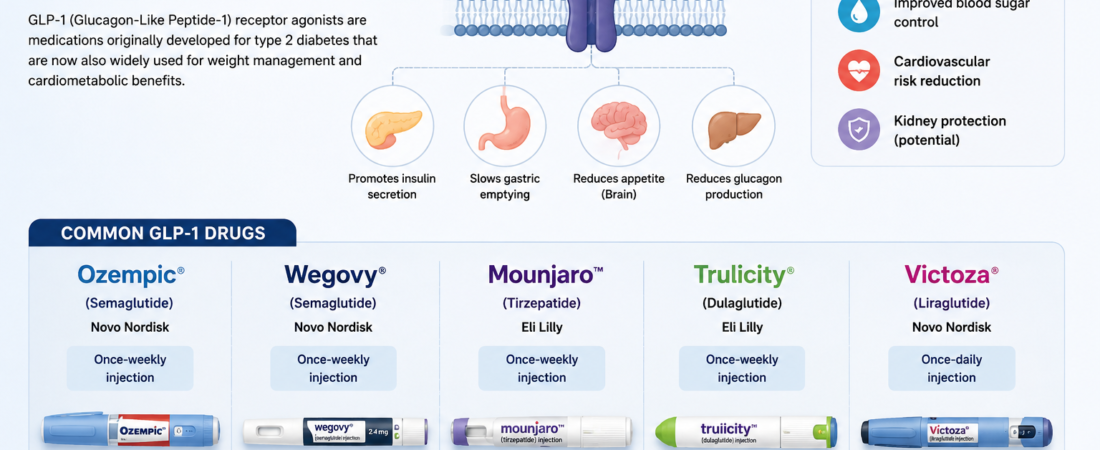
Few classes of medication have transformed public conversation about health as quickly as GLP-1 receptor agonists. Originally developed to treat type 2 diabetes, drugs like semaglutide (sold as Ozempic and Wegovy) and tirzepatide (Mounjaro and Zepbound) have become some of the most talked-about pharmaceuticals in recent memory, prized for their dramatic effects on blood sugar control and weight loss.
How They Work
GLP-1 stands for glucagon-like peptide-1, a hormone the gut naturally releases after eating. It signals the pancreas to release insulin, slows digestion so food is absorbed more gradually, and sends “fullness” signals to the brain. GLP-1 receptor agonist drugs mimic this hormone, but with a longer-lasting effect than the body’s own version, which breaks down within minutes. Because these medications linger in the system, they produce sustained appetite suppression and improved blood sugar regulation, usually with once-weekly injections.
Tirzepatide goes a step further by also activating GIP (glucose-dependent insulinotropic polypeptide) receptors, a dual mechanism that appears to produce even greater weight loss in clinical trials than GLP-1 activity alone.
Clinical Benefits
For people with type 2 diabetes, these drugs can meaningfully lower blood sugar and reduce the risk of cardiovascular events. For weight management, clinical trials have shown average weight reductions in the range of 15-20% of body weight over roughly a year and a half, figures once associated primarily with bariatric surgery. Emerging research also points to benefits beyond weight and blood sugar, including reduced risk of heart attack and stroke, improvements in sleep apnea, and potential effects on kidney disease and liver conditions like MASH (metabolic dysfunction-associated steatohepatitis).
Side Effects and Open Questions
The most common side effects are gastrointestinal: nausea, vomiting, diarrhea, and constipation, especially as doses increase. Rare but more serious risks include pancreatitis and gallbladder problems. There’s also ongoing research into muscle loss that can accompany rapid weight loss, and questions about what happens when people stop taking the drugs, since many regain weight once treatment ends. Because these are relatively new medications used long-term for weight management, researchers are still building a complete picture of their safety over many years of continuous use.
Access and Cost
Despite their effectiveness, GLP-1 drugs remain expensive and are not consistently covered by insurance for weight-loss indications, creating significant access disparities. Supply shortages have also been a recurring issue as demand has outpaced manufacturing capacity, though this has eased somewhat as production has scaled up.
The Bigger Picture
Beyond individual health outcomes, GLP-1 drugs have prompted broader conversations, from how the food and fitness industries might adapt, to questions about the medicalization of weight, to debates over long-term societal costs and benefits. Whatever their ultimate legacy, they represent one of the more significant pharmaceutical developments of the decade, and research into next-generation versions, including oral formulations, continues at a rapid pace.